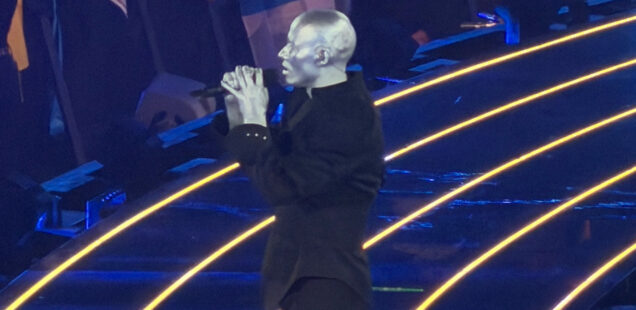
Oh Vienna! My first Eurovision adventure
 by Martin Belam, May 18, 2026
 My view from Vienna of Eurovision 2026 – where technical brilliance and a beautiful city met the ugly reality of 21st-century geopolitics.
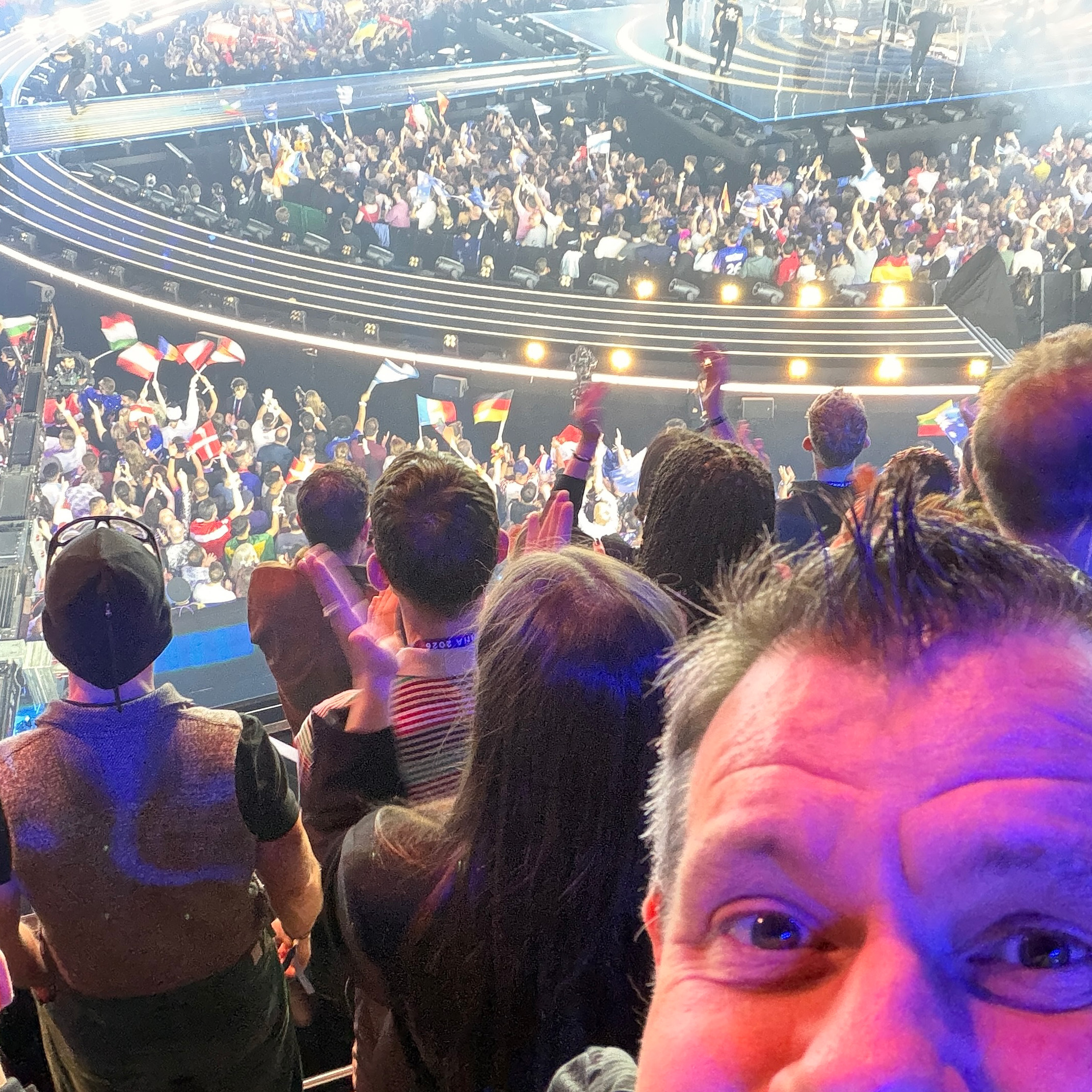
I’ve spent the last few days in Vienna where I was attending the Grand Final of the Eurovision Song Contest, a bucket list item of mine for years.
I was lucky enough to be invited out there by the Vienna tourist board as part of a programme called Vienna Soundcheck, which showcased the city and Austria’s culture. And provided almost too much free booze, a sentence I never thought I would write.
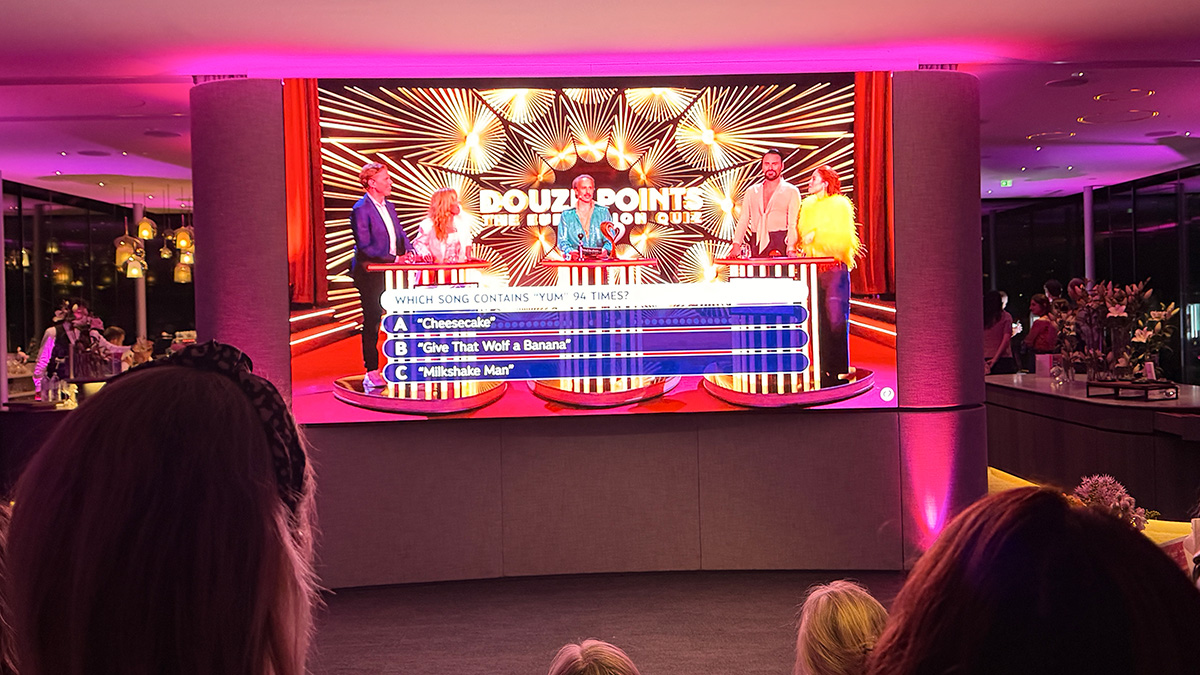
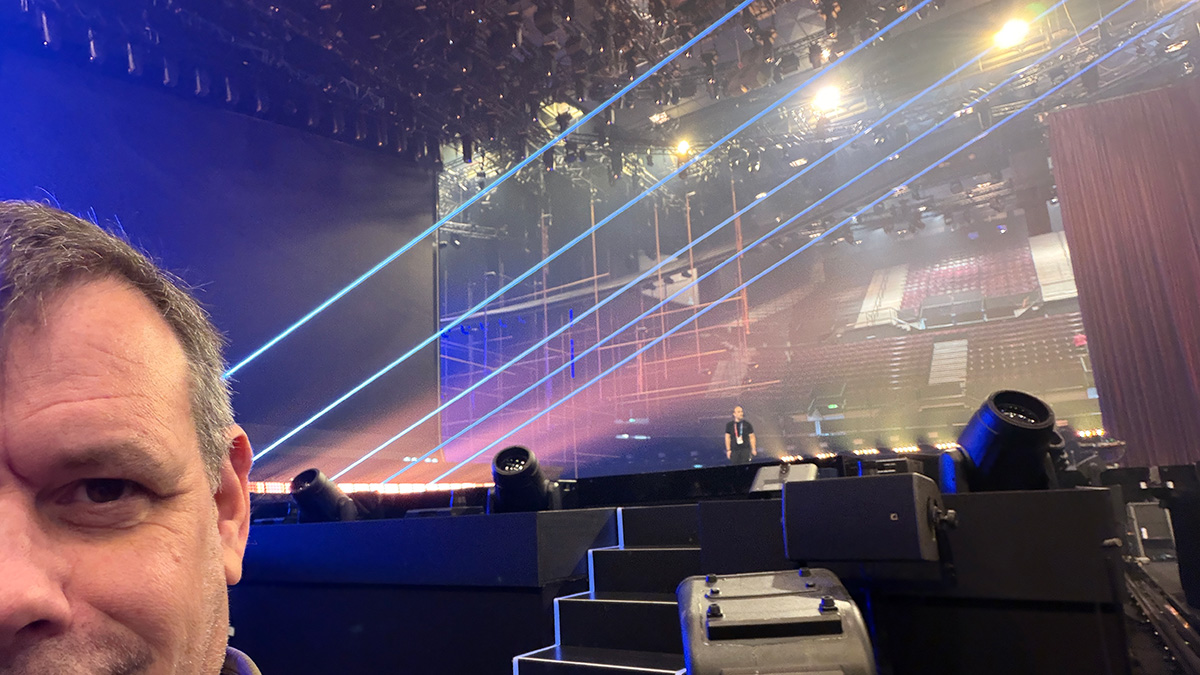
On Friday morning we were able to have a backstage tour of the Eurovision venue. It was quite surreal, to be honest, having on Thursday evening watched Rylan and Scott Mills Angela Scanlon being quizzed on Eurovision history at an international watch-party in a Vienna rooftop bar…
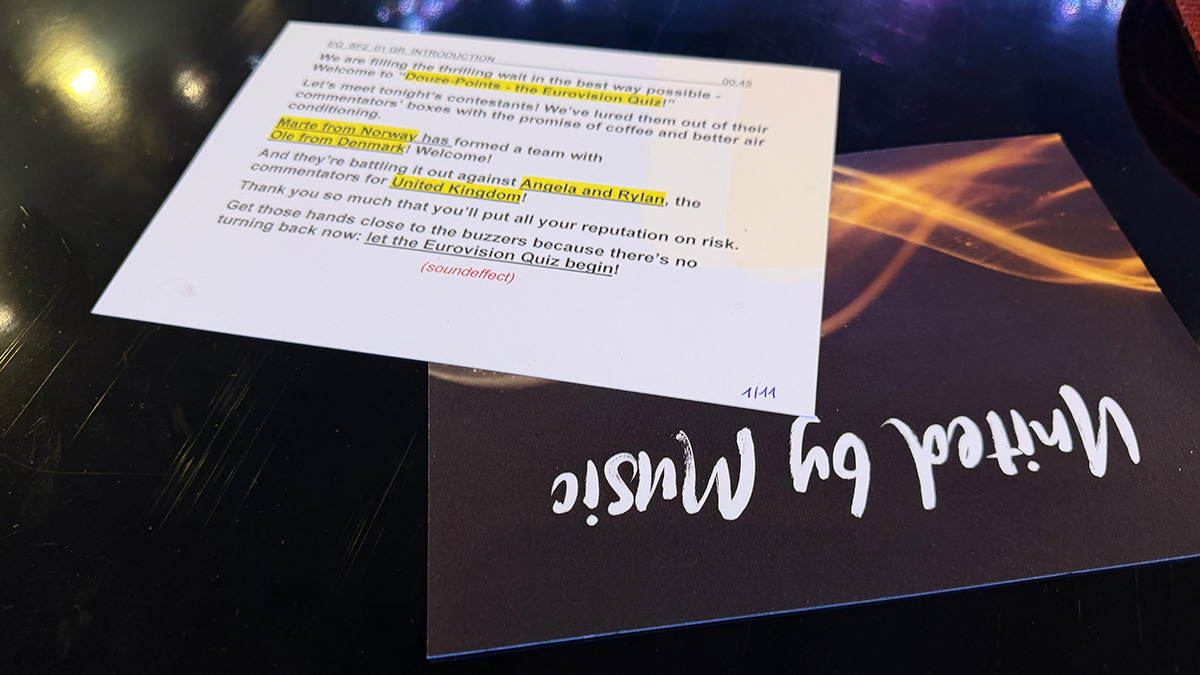
…and then the next day be standing behind the podium where it had actually happened, with Michael Ostrowski’s script still casually sitting there.
And I got a photo of definitely the closest I will ever get to being on stage at Eurovision anyway.
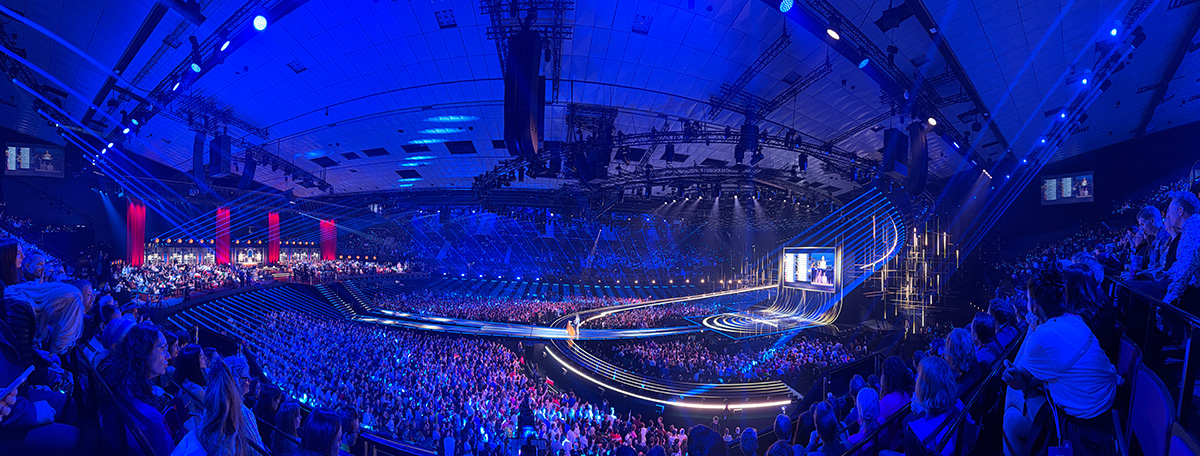
The scale of the production is incredible, and watching it live I was in awe of the technical work of the stage crew and camera crews, who have to be just as, if not more, precise than the artists in their timing and movements.
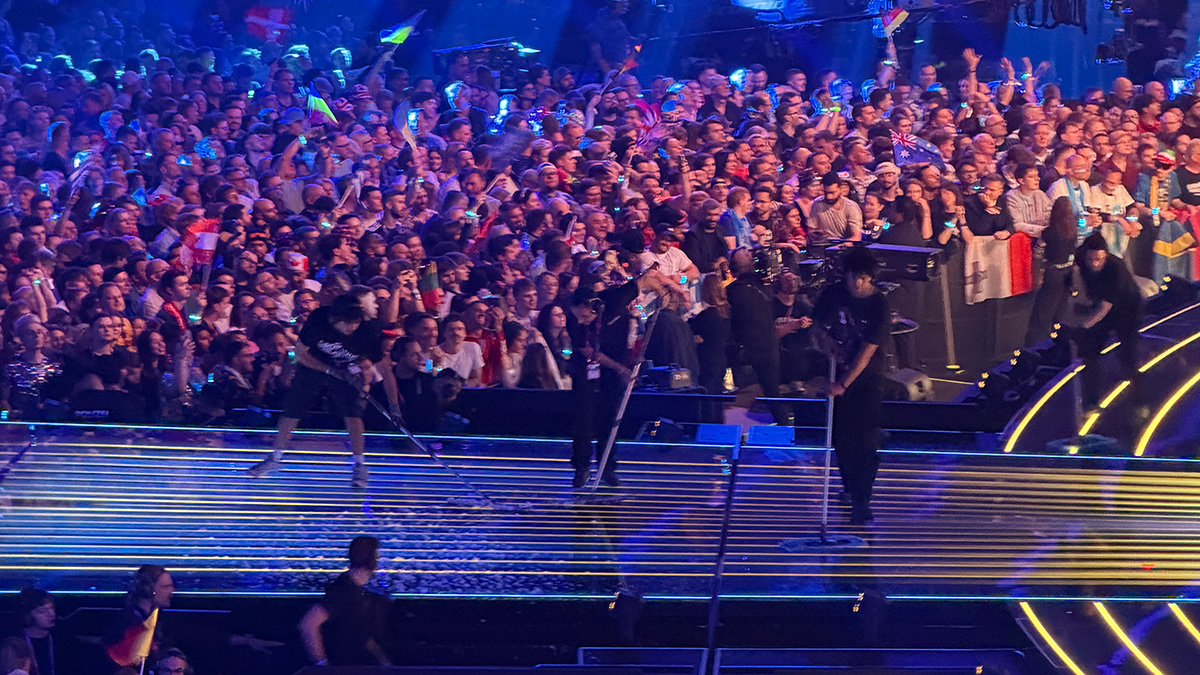
[Stage crew frantically cleaning glitter-cannon detritus off the stage in the 42 second reset between acts]
It also answered a long-standing query of mine when covering the contest, that surely there are some entries that look amazing on the tellybox but absolutely suck to watch live – Daniel Šiška and your Czechia hall of mirrors I am talking about you.
There are screens in the hall so you can see what is being shown on telly in the video inserts, but they aren’t always on through all of the performances.
I realise there is more politics involved in Eurovision than ever before, and that several of my friends no longer watch it because of the continued participation of Israel. I totally understand and respect that decision.
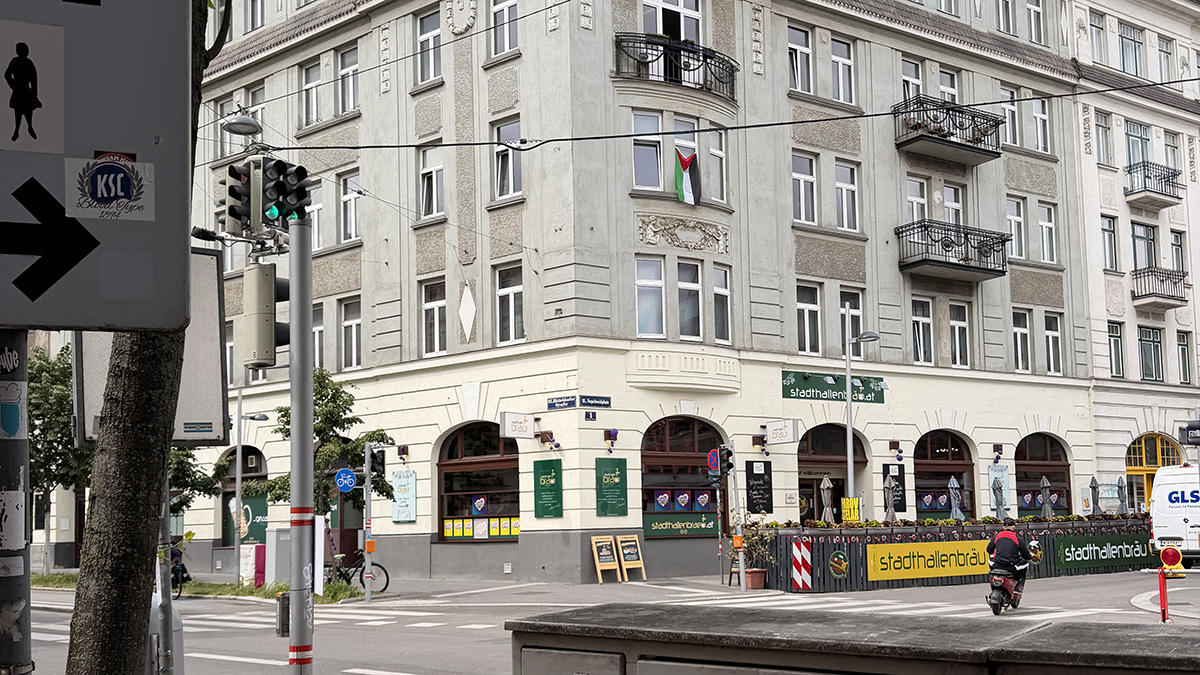
I know there were protests in Vienna, although the only one I directly encountered was someone had hung a Palestinian flag from a window in a building on the corner of Vogelweidplatz that would be seen by some people entering the venue on the night.
Personally? The Guardian continues to cover the event and so I continue to cover it for work, just as I’ve covered Russian and Belarusian athletes competing under “neutral flags” at the Olympics. And I’m a stubborn bastard and unwilling to cede ground and vacate the space. The atmosphere in the hall at the conclusion of the voting was getting toxic and ugly, and the behaviour of some Israeli fans near me was intimidating and very much not in the spirit of the event.
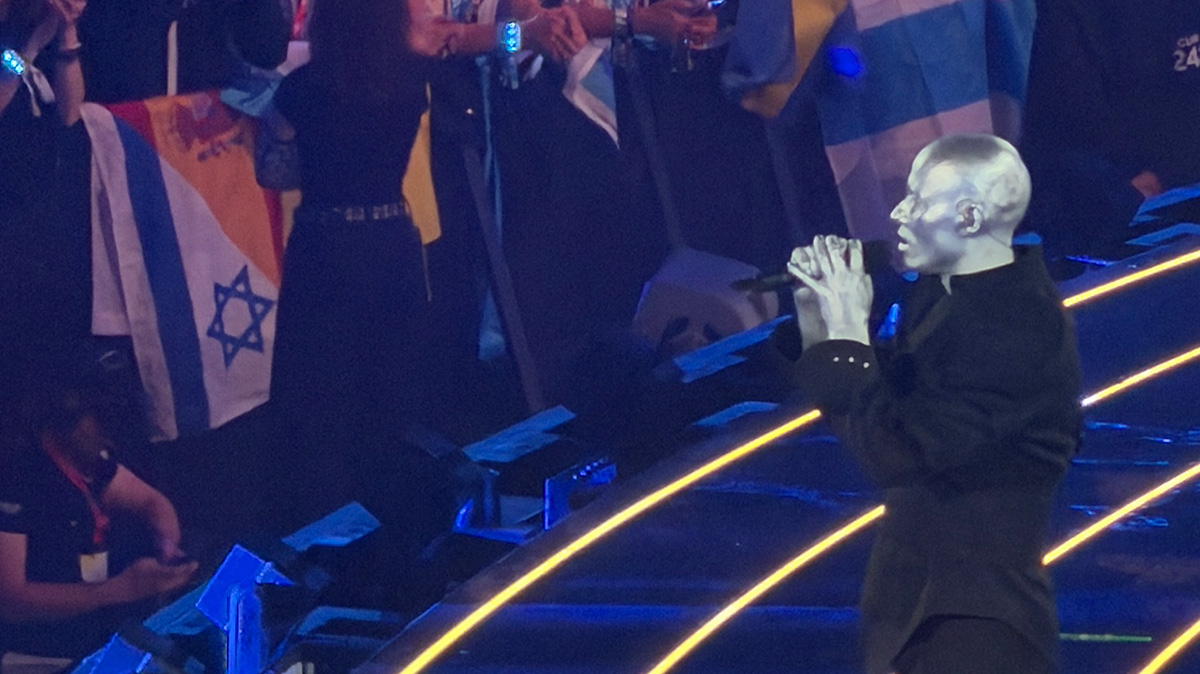
[Despite security making people unfurl flags before being able to take them in and a ban on political symbols, someone managed to bring in and display this half-and-half Israel-Spain flag. Spain boycotted Eurovision over Israel’s participation this year]
Dave Keating wrote very eloquently for the Guardian before this year’s contest about why he wouldn’t be watching:
“In Vienna, we are not bonding over a common joy, but rather over our shared sense of sadness about the politicisation of the contest. This sadness pales in comparison to the trauma and grief experienced by the people affected by the wars fuelling this politicisation, but it is there nonetheless. The European Broadcasting Union (EBU) has found no evidence of hacking or cheating, but it seems implausible that Israel’s unremarkable songs of the past two years so entranced the public that they garnered some of the highest public voting records in the history of the contest. I won’t be tuning in. I’m not boycotting Eurovision. I simply no longer enjoy watching a contest that feels preordained and no longer about the music.”
ESC Insight tested the new system that the EBU introduced to counter the suggestion of deliberate state-sanctioned vote manipulation, and claim they managed to vote 90 times in one of the semi-finals.
“Our results were that we were able to cast a total of 90 votes during the period for the same two countries, by one person utilising one device. The only visible constraints were the requirement to use nine unique bank card numbers and nine unique email addresses.”
Rory Carroll was also good in explaining how this all came about and how in some ways it isn’t all that new: How did Eurovision go from sequins and flares to geopolitical slugfest?
Eurovision is of course a lightning rod for opinions. Very few people call for boycotts of the Champions League or Fifa World Cup or the Olympics and so on which also have Israeli participation. The relentlessly negative “Why oh why doesn’t the UK do well?” gnashing of teeth each year from people who don’t actually watch the contest is also an annual grind.
My tuppence? Look Mum No Computer got a raw deal in the voting this year, I thought it was a quirky attempt for us to try something different. One of the factors of us getting low scores is that we don’t have to go through a semi-final. We probably wouldn’t have made it through this year or last year, sparing blushes on the big night, though Sam Ryder definitely would have. At least in some respects, the contest is still all about the song.
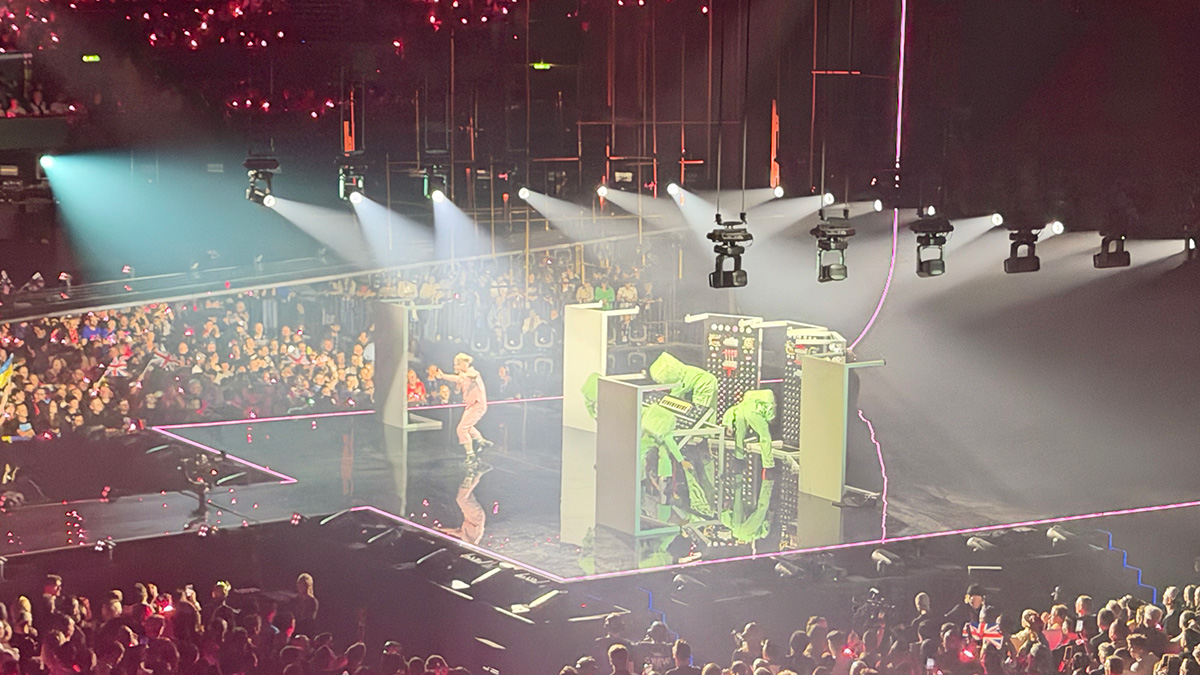
Another interesting aspect is the environmental impact of events like this. The EBU is keen to stress that the competition is a green event and that the back-up generators and batteries in case of a power-failure are all eco-friendly and so forth. And yet the event will have generated tonnes of carbon as people – including me – fly there, and an estimate given to me by a tour guide that the contest uses the electrical equivalent of 10,000 households doesn’t sound very green.
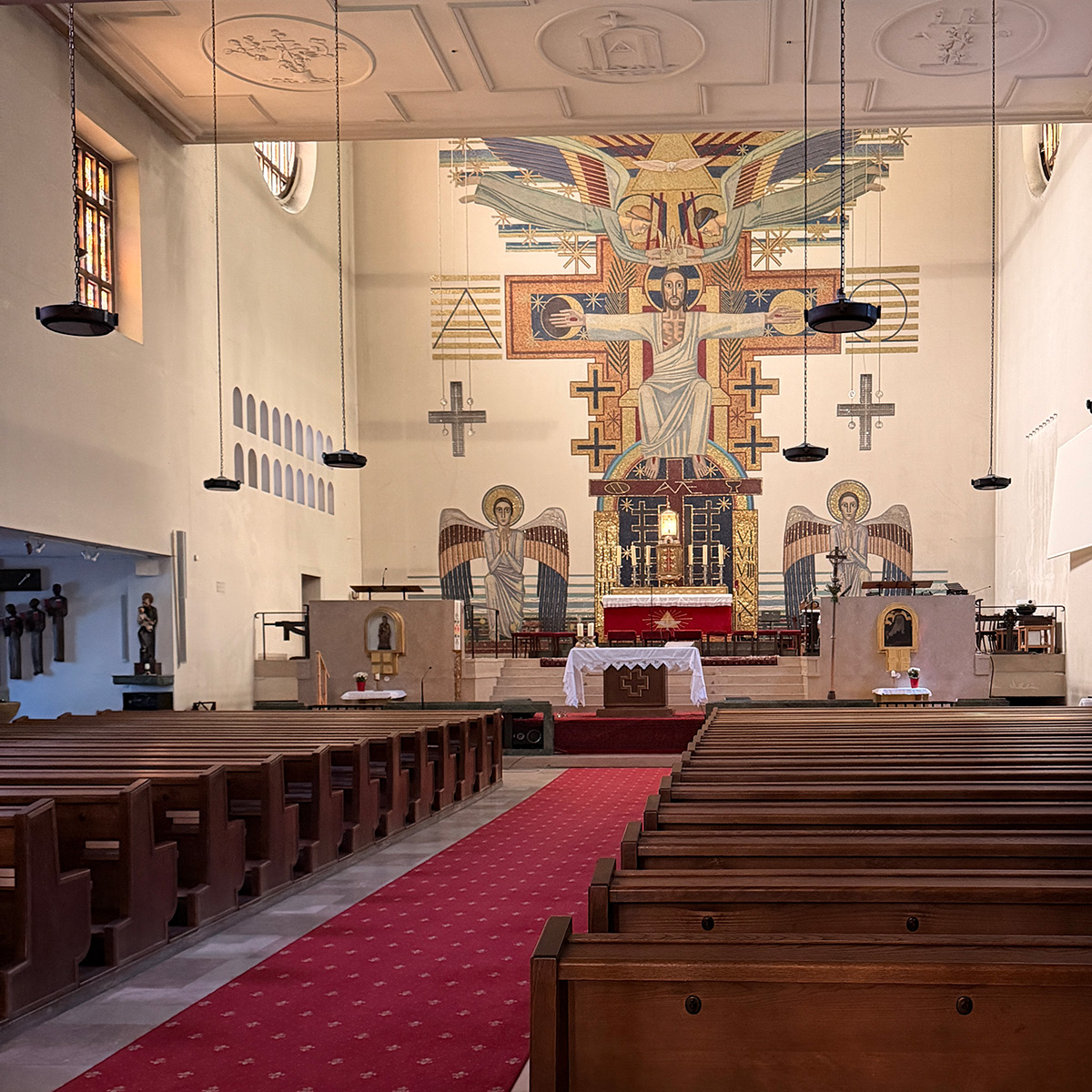
I had an absolute blast in Vienna though, which also included a really enjoyable walking tour around the district near the Wiener Stadthalle led by Jascha Novak of Hidden Vienna, who was very interesting and personable, and also touched upon some awkward chapters of Austria’s history, notably a church built and decorated in the often-overlooked period where Austria was ruled by its own fascists in the 1930s before they were ousted in the Anschluß. He also does tours that focus on the city’s incredibly central role in cold war espionage, which I’d love to go on one day.
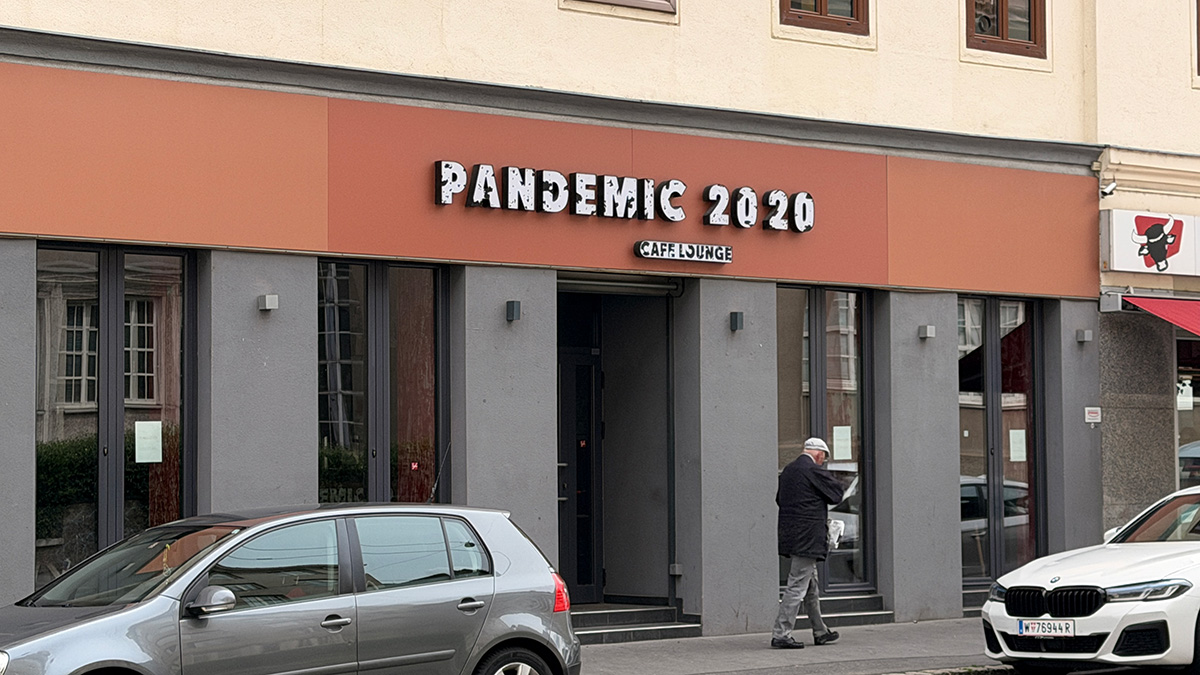
And then there is just the joy of walking around somebody else’s amazing capital city and thinking, hang on, you called your café … that?
Because I was in the arena I couldn’t do the live blog for the Guardian, which I have done since 2021, where I have just delighted to find that I introduced myself like this…
“Just so you know where we are coming from, I unashashedly love Eurovision, watched it as a kid, watched it with ironic post-modern detachment when I was a pretentious twentysomething, and then have grown to truly love it and introduce it to my own kids as the wonderful, glorious and absolutely ridiculous celebration of music that it is. But I don’t take it too seriously, so if you are here for the latest betting tips and an accurate inside track on what is going to win, I’m not your man. If, on the other hand, you are here for stupid jokes, instant social media reaction, and me occasionally getting over-enthusiastic about things and SHOUTING ABOUT THEM IN ALL CAPITALS BRIAN BLESSED STYLE then we are going to get along famously.”
Heidi Stephens stepped back into the role and did a sterling job while I was frantically trying to chip in some bits from the venue via WhatsApp. Hilariously I only knew what the interval act was from Heidi’s blogging because I was too busy in queues for the loos and drinks.
I did manage to write my traditional Eurovision quiz though: Take the ultimate Eurovision quiz! Can you avoid nul points?
I had an absolutely brilliant time in Vienna, and even with the politics and voting shenanigans, being at a Eurovision Song Contest Grand Final is an experience I had wanted for years, and it absolutely lived up to how incredible I always imagined it would be. Chatting to people from all over Europe. Laughs and jokes with strangers and people dressed up beyond the nines. And Vienna is such a beautiful city—really the kind of place that inspired the “Parks, hotels and palaces, promenades and avenues” and “Tragedies, luxuries, statues, parks and galleries” lyrics of Europe Endless and I Travel.
Anyway, here’s hoping I get to write a similar blog post from Sofia (or maybe Plovdiv or Burgas?) next year. Consider this my application.
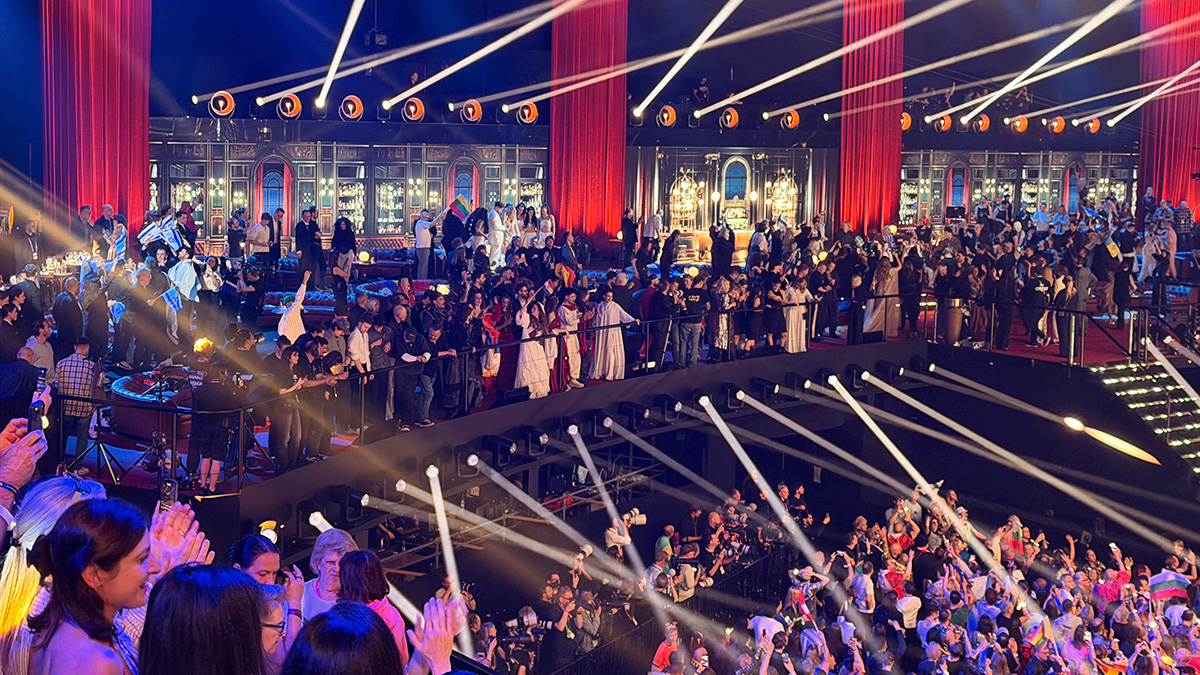
[Most delegations celebrate Bulgaria’s victory in the contest after a tense voting finale]
by Martin Belam, May 18, 2026 I do newsletters, live blogging, news stories and quizzes at the Guardian, and help cover Eurovision and Doctor Who for them too. As a journalist and designer I’ve spent over 25 years building digital products for the likes of Sony, the Guardian, the BBC, the Natural History Museum, Arts Council England and Reach (formerly Trinity Mirror). You can contact me at martin.belam@theguardian.com. Sign up to get my blog posts sent to you via email.