Friday Reading S14E12
 by Martin Belam, April 10, 2026
 A weekly round-up of what I’ve read and enjoyed from around the web.
I’m interested in journalism, media, technology, and nerdy things found down the back of the world wide web’s sofa. Most weeks I publish a handful of things that caught my eye – regardless of what the algorithms were pushing at me. You can subscribe to get it by email here. And if you read something odd and wonderful you think I’d enjoy, feel free to send it my way.

An essential long read from Matt Stone about how AI will remove corrective timing from systems, what that means and why it should worry us all.
“Friction is inefficiency. Hesitation is inconsistency. Review is latency. Context is noise. If a system is trained to optimize throughput, then anything that slows the flow gets marked for extermination. The same people who once promised that automation would eliminate drudgery are now building systems that eliminate pause, eliminate revision, eliminate the few remaining seconds in which a bad decision can still be recognised as bad before it starts breeding consequences. That is why the phrase corrective timing matters so much.”
Read more here: Matt Stone, The Grounded Ghost – No Country for Middle Men
The rather odd development of US tech bros complaining that EU regulation of them has been weakened with the lapse of a law that permitted them to sweep for illegal material being posted amid privacy concerns.
Some actual statistical proof that we are living in silos separated by politics and radicalisation …
“Reform UK voters are the least likely to see posts from friends and family on social media and most likely to see content from brands and news organisations, a study has found. Research analysing users’ feeds on Instagram, Facebook, X, Bluesky and TikTok found that only 13% of Reform UK voters saw content from someone they knew, compared with 23% of Green party voters.
The findings were based on a representative UK survey of 1,000 people who were asked to categorise the top four posts of their most used social media feed. Of these top four posts, 18% came from someone a user actually knew, while 35% were from influencers, public figures or recommended content, and 29% were from adverts and brands.”
Read more here: Jessica Murray, The Guardian – Reform UK voters least likely to see social media posts from family and friends, study finds
I am not going to lie. “Two weeks ago, an AI bot invited me to a party it was organising in Manchester. It then promptly lied to dozens of potential sponsors that I’d agreed to cover the event, and misled me into believing there would be food. Despite all this, it was a pretty good night” is one hell of a drop-into on this piece from Aisha Down. And so is this quote: “I can attest that Manchester, and everywhere else, is about to get a lot stranger.”
Read more here: Aisha Down, The Guardian – An AI bot invited me to its party in Manchester. It was a pretty good night
“Slopaganda is probably here to stay. But with sufficient foresight and courage, we may still be able to adapt to it – and even control it.”
Mark Alfano and Michał Klincewicz analyse the use of AI to generate memes in a time of conflict.
I know what my answer would be, but Sophie Wilson looks at a rising trend and asks would you let AI help you choose your next tattoo?

Enjoying Friday Reading by email? Feel free to forward it to a friend – they can sign up here. And if you’ve recently read something you think I would enjoy, do send it my way.

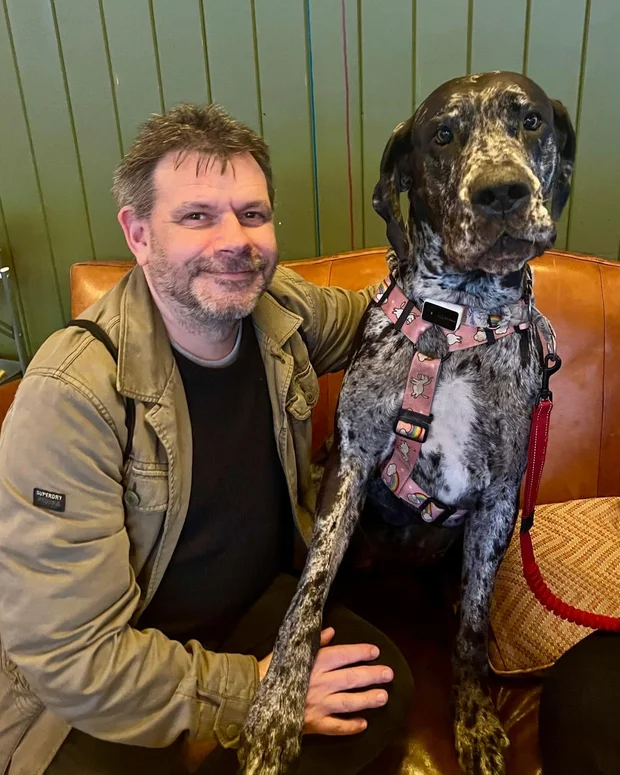
This week’s Guardian Thursday news quiz: spaceship crews, planning news and who is in a meltdown?. Guest animal: Tigger from Fareham, with quiz author shown for scale. One regular contributor messaged me to say in the picture I don’t look a day older than “a rusty teakettle”. Nice one, thanks.
This gallery of 33 scandalous photos that shocked the world truly is a gift that keeps on giving – even if it doesn’t have the Duchess of Argyll’s actual fellatio Polaroids in it. This little bit from Gaby Hinsliff in the intro though was bittersweet:
“From the historic to the trivial, what makes many of these images unusually poignant in 2026 is that the era they represent – one of humans offering other humans visual proof of our shared world – is now under threat. Hoaxers have always existed, as the fakes in this collection show. But the proliferation of highly convincing AI-generated images, spread instantly and virally by social media, risks a much more serious erosion of trust in what our eyes are telling us.
Malign actors are already exploiting that technology. Will it become common practice for public figures snapped in blatant wrongdoing to blame AI? What you see here may yet come to be remembered as a golden age for photography: one in which cameras were quick enough to catch a fleeting moment of truth, and we were still capable of believing it.”
“Every pamphlet, every plaque, every lecture I have watched or read on Avebury seems to contradict the previous one,” says Nat Guest as she goes on one of her silly little walks, including a night-time flit to the Avebury stones after a day spent trying to coax out their secrets:
“We have spent the day tracing circles within circles, trying to select our favourite rocks – or at least, those that speak to us in some way. We find the stones strangely mute, though, despite my mum having brought along small beakers so we can listen to them as you would listen to the sea in a shell.”
Read more here: Nat Guest, I go on a little walk – I go on a silly little trip to… Avebury – on narratives of place and questions without answers
Wyrd Britain reminds us that there used to be a 1980 BBC1 Jackanory spinoff “Spine Chillers” that featured abridged readings of classic spooky stories. Highlighted in this blog post is Saki’s The Music on the Hill, read by Jonathan Pryce.
Labour MP for Milton Keynes North, Chris Curtis, has written a piece arguing in favour of building tram networks in order to unlock economic productivity across British cities. I don’t know about the economy angle, but I’d love to have more trams to visit.
Catherine Kim in Politico on the phenomena of Trump-adoring right-wing youth in South Korea.
All I know is that I am much better at pool after two pints, and much worse at pool after four pints. Here Joel Snape looks at the actual science on why alcohol makes us both happy and miserable – and what else it does to our minds and bodies.

An extremely detailed interview with Peter Williams, who was engineer for some of the sessions of David Sylvian’s solo debut Brilliant Trees. It is specifically about the song Nostalgia from that album, but more broadly about working with Steve Nye, guest musician Holger Czukay, and Sylvian himself.
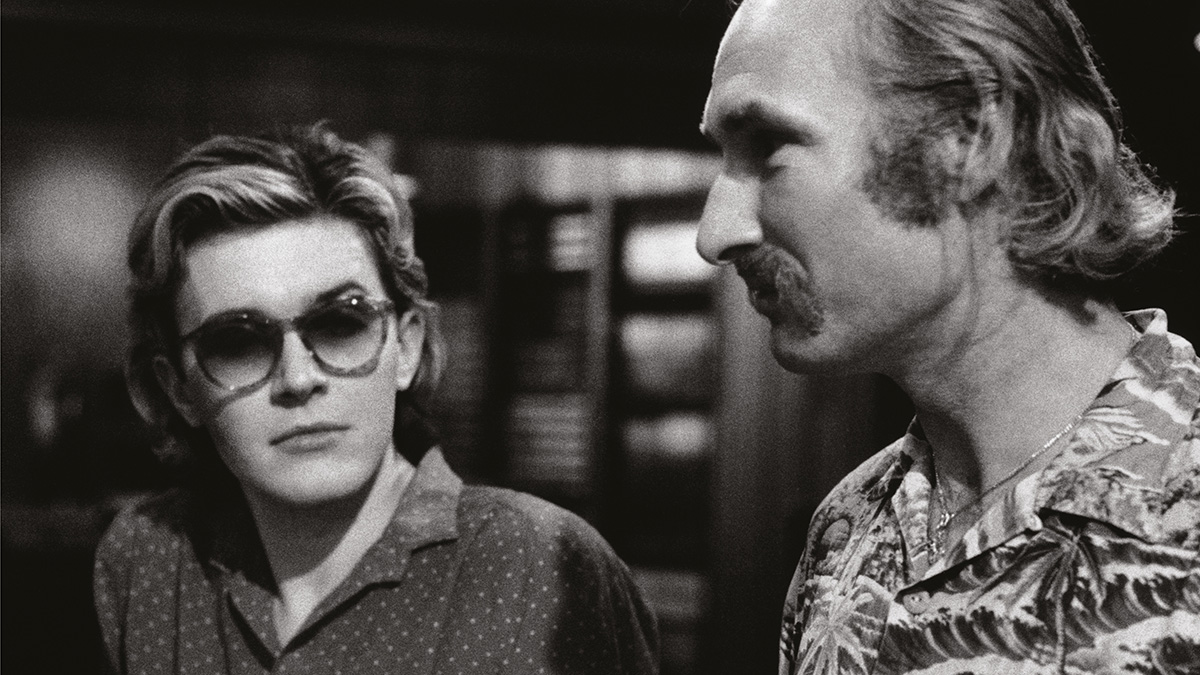
David Sylvian and Holger Czukay
Worth bookmarking from James Cridland – an updated guide to how to listen to BBC Radio outside the UK.
Matt Mills interviews various heavy metal bands to find out why so many in the genre have decided in recent years to adopt wearing masks on stage.
I really enjoyed seeing Musik starring Frances Barber back in October – “An hour long tour de force one woman show from Frances Barber as she tells a fictional life story woven around real cultural icons and events with a self-absorbed self-centred acid wit, and occasionally bursts into songs written by Tennant/Lowe” – and if that sounds like your bag it is on at selected cinemas tonight and on Sunday.

A date for your diary – East London’s best 90s+Britpop+Indie night is back, Back, BACK! Stereotypes at The Ciderhouse E7, Friday 15 May with DJ Miss Cosmic.

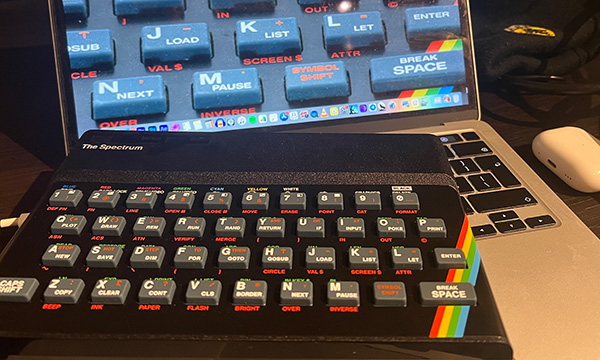
“As a rule, if a game was released on the ZX Spectrum based on a film, the likelihood was that it was terrible beyond measure.”
From that opening line this is a great set of reviews on Weird Bones of every game tenuously linked to the horror genre on the ol’ 48k rubber-keyed wonder.

David Marples on how football has changed during the 43 years he has taken to complete a tour of all 92 league grounds.
My contributions to the Guardian’s First Edition newsletter this week were:
· Tuesday briefing: What is driving the record rise in stalking offences?
· Thursday briefing: What difference will the ceasefire in the Middle East make, and will it hold?
Friday Reading is a (usually) weekly series of recommended reads from Martin Belam, covering journalism, media and technology, and other interesting nerdy things found on the internet. It is now in its fourteenth season. Sign up here to receive it by email.
by Martin Belam, April 10, 2026 I do live blogging, news stories and quizzes at the Guardian, and help cover Eurovision and Doctor Who for them too. As a journalist and designer I’ve spent over 25 years building digital products for the likes of Sony, the Guardian, the BBC, the Natural History Museum, Arts Council England and Reach (formerly Trinity Mirror). You can contact me at martin.belam@theguardian.com. Sign up to get my blog posts sent to you via email.