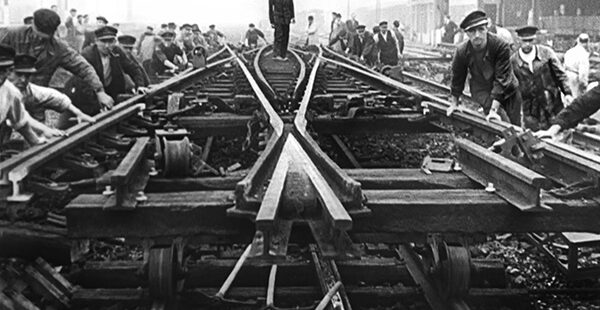
Thoughts on … Trains (2024) – Maciej Drygas
 by Martin Belam, March 23, 2026
 How archive footage of trains tells the story of a continent – and a century

One of my favourite things I’ve watched in recent years is From the Sea to the Land Beyond, directed by Penny Woolcock and with a soundtrack by Sea Power. Pociagi [Trains] (2024) from Maciej Drygas is in a similar vein – and one of the best things I’ve seen on the big screen for ages.
The premise of Trains is simple: archive footage, no narration, tracing trains across the 20th century from pre-first world war through to the aftermath of the second. In doing so, it manages to tell an extraordinary social history without ever needing words.
Watching material like this – as I was the other day watching the fictionalised versions of The Testament of Ann Lee and Train Dreams back in December – you are struck by how hard life looks in the past: how much depended on manual labour, and how much risk people simply had to accept. Trains opens with sequences of locomotives being built: hot metal, close work, no gloves or face protection, workers standing in positions where the slightest misjudgement could be fatal. Anyone complaining that “elf’n’safety” is strangling productivity should probably spend a few minutes with those clips and decide whether they really want to go back to those days.

The wars effectively bookend the film. For 1914–18, there are astonishing scenes of soldiers being waved off in a spirit of glory, followed by the grim reality of hospital trains bringing the wounded home. There are artillery trains too – vast guns mounted on rails – which only really underline how imprecise and unwieldy that kind of warfare could be.
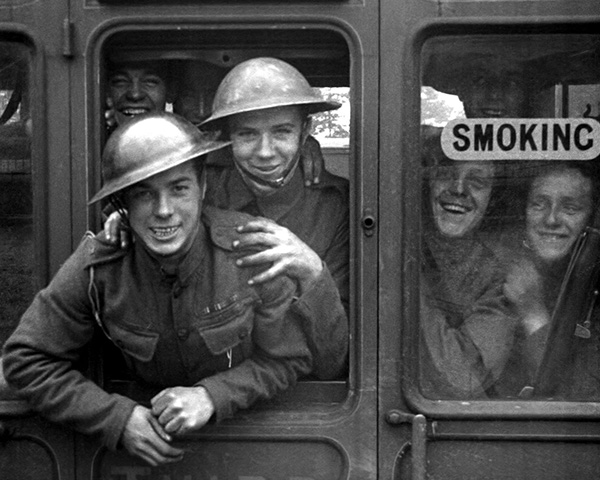
The second world war footage is even more harrowing. Women scramble over relief packages being thrown from trains; Nazi officers lounge in comfort between destinations; children press flowers into Hitler’s hands as his train tour passes through crowds of adoration. There are scenes of people being herded into wagons bound for the camps, and of emaciated bodies that did not survive the journey.

But trains are not solely instruments of horror here. There is also evacuation – children being sent away from cities under threat – and the fragile relief of Holocaust survivors being transported away from the camps at the war’s end.
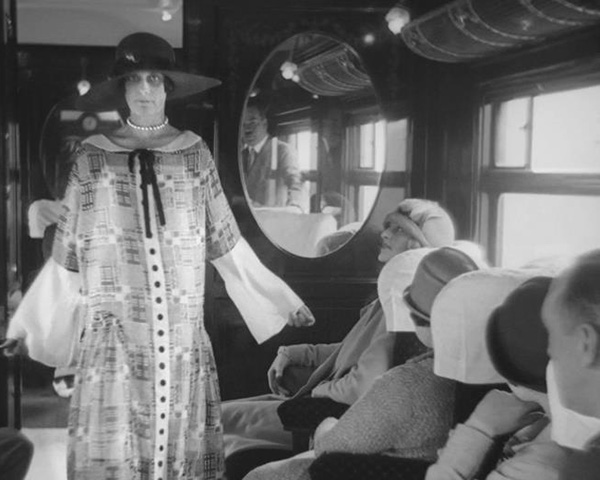
In between all of that, there is everyday life: frustrated commuters, seaside trips, luxury travel, the quiet infrastructure of mail delivery. A whole continent moving, for better and worse.
One of the things I particularly loved is how it echoes something I’ve seen live: 1990s Kraftwerk shows would accompany Trans-Europe Express / Metall auf Metall / Abzug with archive railway footage. The later 3D shows replaced that with digital renderings – still beautiful, but different. There was something quietly wonderful about sitting through 80 minutes of real metal on metal as compiled by Drygas.
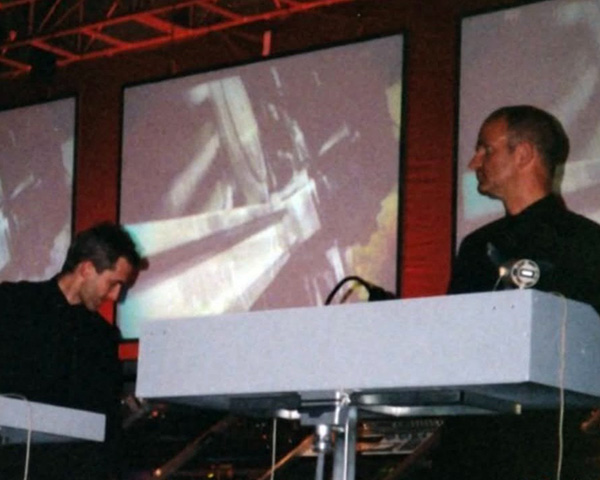
[Picture caption: Kraftwerk playing Trans Europe Express in 1992 with real train footage]
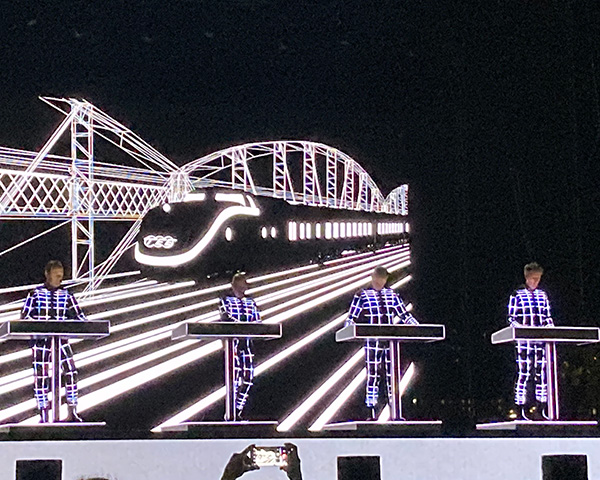
[Picture caption: Kraftwerk’s digital TEE train]
Most of all, though, director Drygas and editor Rafał Listopad have done an extraordinary job in sourcing and restoring this material. From postwar Berlin to holidaymakers heading out from Knotty Ash, the footage feels both intimate and vast. This will be an absolutely certain Blu-ray purchase and rewatch for me.
If you have even a passing interest in history, cinema, or trains, it’s hard to imagine not being completely absorbed by it.
Thoughts on … is an occasional series where I write in greater depth about specific pieces of film, television and music. If you’d like to get these sent to you by email, you can sign up here.
by Martin Belam, March 23, 2026 I do newsletters, live blogging, news stories and quizzes at the Guardian, and help cover Eurovision and Doctor Who for them too. As a journalist and designer I’ve spent over 25 years building digital products for the likes of Sony, the Guardian, the BBC, the Natural History Museum, Arts Council England and Reach (formerly Trinity Mirror). You can contact me at martin.belam@theguardian.com. Sign up to get my blog posts sent to you via email.