Friday Reading S14E09
 by Martin Belam, March 20, 2026
 A weekly round-up of what I’ve read and enjoyed from around the web.
I’m interested in journalism, media, technology, and nerdy things found down the back of the world wide web’s sofa. Most weeks I publish a handful of things I’ve read that caught my eye – regardless of what the algorithms were pushing at me. You can subscribe to get it by email here. And if you read something odd and wonderful you think I’d enjoy, feel free to send it my way.

I absolutely loved this takedown by Jason Koebler of Mark Zuckerberg’s creepy crappy metaverse, dripping with invective and “I told you so”.
Zuckerberg’s bold vision of the metaverse was a place where T-Pain would sell NFTs of imaginary sneakers at concerts attended by people sitting silently in their living rooms with computers strapped to their face. The complete and utter failure of the metaverse is a reminder not just of the fact that the future Silicon Valley is force feeding us is not inevitable, but that quite often these oligarchs quite simply cannot relate to real people, don’t know how or why people use their products, and very often have no idea what they’re doing.
Read more here: Jason Koebler, 404 Media – RIP Metaverse, an $80bn dumpster fire nobody wanted. Who could have possibly predicted this, besides everyone?
ALSO FROM THE WHO COULD SEE THIS COMING FILES: The Observer offers voluntary redundancy to all staff. Myself and my NUJ colleagues went on strike in order to try and prevent the sale of the paper, or at least secure better terms and conditions for the staff being forced out of the business.
The Observer has offered its entire workforce voluntary redundancy as the world’s oldest Sunday newspaper grapples for direction following its sale by The Guardian. The Telegraph has learned that the weekly title has offered voluntary redundancy to all 140 staff, with bosses warning that the cuts could become compulsory. Journalists staged a four-day strike in 2024 over plans to hand the title to Tortoise, a loss-making start-up founded by James Harding, the former head of BBC News.
Read more here: James Warrington, The Telegraph – The Observer offers voluntary redundancy to all staff
Google has dropped a new artificial intelligence search feature that gave users crowdsourced health advice from amateurs around the world. How do these things ever get off the drawing board, let alone get launched?
Grammarly has disabled a controversial AI feature that imitated the style of prominent writers and academics, and is facing a multimillion-dollar lawsuit from those whose identities were used without consent. I ask again … how do these things ever get off the drawing board, let alone get launched?
Emerging evidence indicates that agential AI might validate or amplify delusional or grandiose content, particularly in users already vulnerable to psychosis, although it is not clear whether these interactions can result in the emergence of de novo psychosis in the absence of pre-existing vulnerability.
There’s a lot of big words there, but this doesn’t sound great, does it? New study raises concerns about AI chatbots fueling delusional thinking.
Norway has at least taken a stand against the whole of the internet being subjected to enshittification with a funny campaign video showing a bloke making real world things slightly worse through deliberate product decisions.
It sounds like the opening of a sci-fi film, but US scientists recently uploaded a copy of the brain of a living fly into a simulation. In San Francisco, biotechnology company Eon Systems created a virtual insect that knew how to walk, fly, groom and feed in its virtual environment. Researchers in Australia, meanwhile, have taught a petri dish containing 200,000 human brain cells to play the iconic 90s shooter Doom. One experiment has pushed a brain into a computer; the other has plugged a computer into brain cells. Both stories have been hailed as scientific breakthroughs, but have also sparked inevitable fears about the prospects of lab-grown humans and digital clones. Should we be concerned?
I have watched a lot of sci-fi b-movies, and so my hunch would be “Should we be concerned?” “Yep.”
Read more here: Rich Pelley, The Guardian – A petri dish of human brain cells is currently playing Doom. Should we be worried?
Nat Guest gloriously declares she has always been “the primary subject of my own study” in this post detailing immense sensory overload and how it makes everyday interactions unbearable for her.
The body has more senses than the Big Five, and you can have sensitivities or processing abnormalities across what I think of as the “Dark Senses” too. These hidden senses include: vestibular – your balance and coordination; interoception – your awareness of internal and autonomic processes, such as your heartbeat; proprioception – your awareness of the body’s position relative to the space around it.
To these more hidden Dark Senses I would add a sense of bodily integrity: the feeling of your physical and psychological edges and borders, a hyper-awareness of intrusion, a drive to remain whole and autonomous. The feeling of where you end and the world begins. I don’t know if there is a word for this sense, but senses can exist without words, and for a long time do.
Read more here: Nat Guest, Nothing but a Wordbag – Bad Wiring: A Non-Exhaustive Catalogue of Sensory Malfunctions
“The woman filmed without her consent sees none of that” is just one of the many depressing sentences in this piece looking at the revenue-making potential of “creepshots in motion” aka social media nightlife videos that focus on young women.
I used to love seeing hedgehogs in our garden in the 1970s and 1980s in London, and miss the little critters. Emma Beddington urges us to create hedgehog havens and suggests seven other ways to help our prickly friends

Enjoying Friday Reading by email? Feel free to forward it to a friend – they can sign up here. And if you’ve recently read something you think I would enjoy, do send it my way.

This week’s Guardian Thursday news quiz: weird particles, Welsh conquests and web issues.

Golfing illustration: Anaïs Mims.
Guest animal: Blue


This is just a lovely interview with Peter Purves about last week, when he was surprised by being taken to a screening of two of the Doctor Who episodes he worked on that haven’t been seen since 1965 and have been recovered in something, frankly, of a miracle.
Mind you the fact that the lovely people at Film is Fabulous, who secured the episodes, had to put out A statement on Doctor Who in which they had to say basically, no we don’t have a stash of episodes we are holding back, no they aren’t for sale, no we aren’t going to reveal personal details of the person who had them, no we aren’t an archive, no we aren’t on a mission to find missing Doctor Who. This line in particular is grim, and reflects that in some quarters anger has been directed that they weren’t handed in earlier:
The deceased collector curated his films with great care, but did not necessarily appreciate the importance of each print, or their archival status. Indeed, he had no knowledge of, or interest in, Doctor Who. The original 16mm prints of the recovered episodes, with the restored digital scans, will be returned to the BBC Archives.

Sarah Michelle Gellar says there will be no Buffy The Vampire Slayer reboot. Booooooooo. Mind you, presumably the fandom would have hated it from the get-go, as we will no doubt see with Blake’s 7 in due course.
This is a really interesting point about how differently people think and work from Cassie Werber about how re-writing her second novel after editor’s notes needed to be a visceral project of physically committing things to paper.
“For a month and a half, which felt like several years, I ground along taking it step-by-step. I re-read the long email of notes I’d been sent, then wrote them out by hand. This sounds insane, but I was trying to absorb them, to understand every word and get them inside me. I wrote notes on what I planned to do, first in my notebook and then, because I was writing so much, on sheet after sheet of A4. I thought I’d study them all closely in the weeks to come. I didn’t; it was just the work of thinking, and for me that often has to be a physical thing.”
Read more here: Cassie Werber, Fierce Seasons – Re-writing my book for the third time
I’ve mentioned before that suddenly becoming interested in birds and bird-watching appears to be a universal manifestation of middle-age, but these portraits of birds against incredible wallpaper backgrounds by Claire Rosen are sensational.

I really enjoyed this extract from Alexander Hacke’s new book in the Quietus, about him discovering music at a very formative stage in a record store called Zensor, which seems to have done for him what Ugly Child did for me.
“Nonetheless it was the myriad of utterly obscure releases, often on 7-inch vinyl, that lay the foundations of my musical development and strengthened my view that music should not be produced by an elite for the faceless masses. On the contrary: the more personal and bizarre a release was, the more respect it would earn from me and likeminded music devotees. Especially productions that were clearly made on a limited or practically non-existent budget were held in very high regard. The more extreme the musical content was, the bigger the likelihood it would find extremely strong support.”
Read more here: Alexander Hacke, The Quietus – A Cave of Wonders: Alexander Hacke of Einstürzende Neubauten on the Record Shop that Made Him
This post has some great 1983 photographs of Zensor, the shop Hacke was talking about.
But this is a real shame, the British Record Shop Archive website has been replaced by a holding page that just says “Due to unforseen circumstances, the BRSA website is on hiatus for the foreseeable future.”
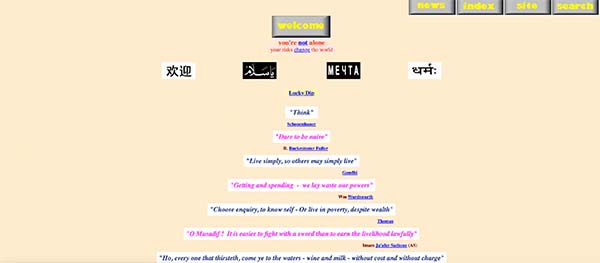
I really hate it when bits of the web disappear, as I wrote about here when Ray Dickenson’s lovingly hand-built and intense conspiracy theory website perceptions.couk.com vanished.

I know that Brian Clough is generally regarded as an absolute hero, but he could also be a right cunt, such as calling Justin Fashanu – one of very few male professional footballers to ever come out as gay – “a bloody poof”. That is mentioned in this incredibly moving Donald McRae interview with Tony Powell, who was a teammate of Fashanu for a while, and also gay.
I grew up reading 2000AD and it should all be jetbacks, flying cars and droids by now. However, it does seem like London genuinely is on the verge of getting self-driving cabs. Steve Rose investigates.

I was pretty underwhelmed by Mamoru Hosoda’s Scarlet, which retells the story of Hamlet with a female lead and melds into Japanese mythology of the afterlife. Nick Chen interviews the legendary anime director, who talks up the creative process in a way which makes me wish I’d liked it more.

My contributions to the Guardian’s First Edition newsletter this week were:
· Monday briefing: Why Britain is becoming less charitable – and what it means for those that need it most
· Friday briefing: What the Covid inquiry reveals about the NHS – and why it should worry us
Friday Reading is a (usually) weekly series of recommended reads from Martin Belam, covering journalism, media and technology, and other interesting nerdy things found on the internet. It is now in its fourteenth season. Sign up here to receive it by email.
by Martin Belam, March 20, 2026 I do live blogging, news stories and quizzes at the Guardian, and help cover Eurovision and Doctor Who for them too. As a journalist and designer I’ve spent over 25 years building digital products for the likes of Sony, the Guardian, the BBC, the Natural History Museum, Arts Council England and Reach (formerly Trinity Mirror). You can contact me at martin.belam@theguardian.com. Sign up to get my blog posts sent to you via email.